The Sovereignty of Self:
The Awakening in New England
Transcendentalism, born in the 1830s amid the intellectual heart of New England, teaches that truth and spiritual awakening are obtained through intuition and self-trust. It is a bold rejection of the "cold" intellectualism of Unitarianism, favoring instead a direct, vibrant spiritual experience inspired by European Romanticism.
Seeking to awaken the "Over-soul", that spiritual essence connecting all living beings,this movement began as a dissatisfaction with Rationalism. It serves as a reminder that to be human is to be divine, provided one does not allow society to suppress the spirit.
The Vanguard of Thought
Ralph Waldo Emerson, the movement's primary leader, defines self-reliance through works like "The Over-soul". Beside him, Henry David Thoreau acts as the living example, living simply at Walden Pond and advocating for moral resistance in "Civil Disobedience."
Margaret Fuller expanded these principles into the realm of social justice, writing "Women in the 19th Century" to champion education reform and equality.
The Transcendental Club & The Dial
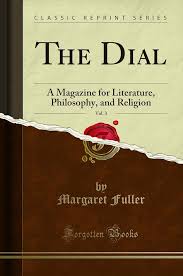
In 1836, Harvard alumni and Unitarian ministers formed the Transcendental Club. To spread their message, they published "The Dial," edited by Fuller and later Emerson, giving a vital voice to the movement’s most provocative thinkers.
Special Report: A Message from Mr. Emerson
[Scene: Cinematic B-Roll of nature closeups, dreamy music, pan to RWE]
RWE: Hello everyone, my name is Ralph Waldo Emerson, and today I speak to you from the great outdoors. From the heart of nature herself. These marvelous New England winters always allow me to channel my deepest thoughts. These thoughts of mine are rooted in Transcendentalism.
[Transition Music Rise, B Roll]
RWE: Transcendentalism focuses on several key principles: We transcendentalists believe in self reliance. Each person’s inner conscience provides a moral sense far more trustworthy than any law or imposed belief. When a person learns to rely on themself, both physically and mentally, they can find truth.
This also means that when laws are unjust, a transcendentalist must stick with their conscience and morality by acting against it. As Henry David Thoreau said in “Civil Disobedience,” “The only obligation which I have a right to assume is to do at any time what I think is right”
Furthermore, a transcendentalist believes that humanity is born with an innate moral goodness, and rejects the idea that humans are born sinful. It is rather materialism and conformity that corrupts a person.
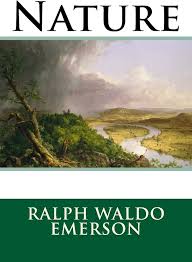
So far, I’ve talked much about a transcendentalist’s inner character, but how can one access this moral awakening? The answer is through nature. Nature is a sacred, spiritual teacher. By spending time in nature, away from noise and conformity, a person can truly understand the universe and themselves. As I wrote in my book “Nature,” “In the woods, we return to reason and faith”
In conclusion, Transcendentalism teaches that truth and spiritual awakening can be obtained through intuition, nature, and self trust, while not allowing society to suppress the human spirit. Until next time, I’m Ralph Waldo Emerson, urging you to trust yourself, and seek your truth.